 Edd Branson Publishers

Home · About
The town that absorbed a capital's growth.
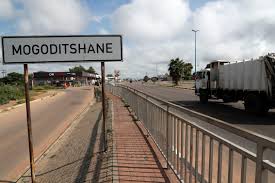
Mogoditshane East covers the eastern half of Mogoditshane, twenty square kilometres of entirely urban settlement on the western edge of Greater Gaborone. It is home to 43,155 people and, since 2024, it is a parliamentary constituency in its own right.
Population
2022 Delimitation Commission Report
Area
Entirely urban, no rural localities
Density
Against 1,258 per km² in Gaborone
Elevation
24°38′S, 25°52′E
Location
Ten kilometres decides everything.
Mogoditshane lies in Kweneng District, in the Kweneng East sub-district, immediately west of Gaborone. The settlement is in conurbation with the capital: there is no meaningful gap of open country between the two, and daily life runs across the boundary in both directions.
That position explains the constituency's shape. Gaborone recorded 246,325 residents at the 2022 census and its metropolitan area 534,842. Mogoditshane took a large share of the households that the capital could not house, which is why an area of twenty square kilometres now carries a population comparable to a mid-sized Botswana town.
Following the 2022 delimitation, Mogoditshane was divided into two constituencies. The eastern half became Mogoditshane East, and the western half, covering seventy-two square kilometres and 39,321 people, became Mogoditshane West.
Kweneng East, the sub-district containing both, now carries 14 per cent of Botswana's entire population, the largest share of any census district and up from 12.7 per cent a decade earlier. Statistics Botswana attributes that shift directly to the district's proximity to Gaborone.
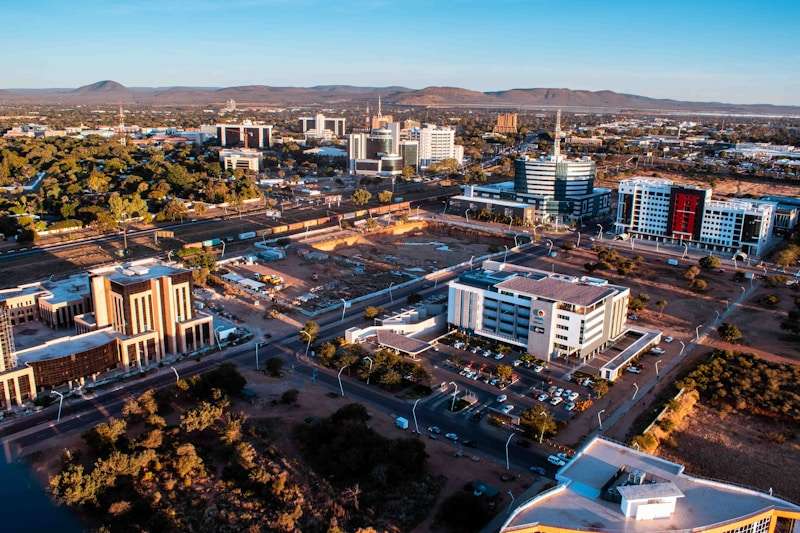
Greater Gaborone from the air. Mogoditshane sits on the western approach to the capital.
Growth and demographics
Four times larger in ten years.
The census record is the single most important fact about this place, and it is worth reading slowly. Mogoditshane counted 14,246 residents in 2001, 57,637 in 2011, and 88,098 in 2022, when it overtook Molepolole and Maun to become the largest village in Botswana.
What growth of this kind produces
New household formation on a scale that outpaces serviced land delivery, which in turn shapes every queue in the constituency, from plots to classrooms.
Age profile
Roughly 13,180 residents under 15, about 30,800 of working age and around 2,400 aged over 65. About 37.7 per cent of the constituency is aged between 15 and 35.
Households
About 13,077 households at the national average of 3.3 people, down from 3.7 a decade ago. Roughly 514 new households form here each year.
Constituency demographic profile
- Population43,155
- Households13,077
- Average household size3.3
- Under 1513,180 (30.5%)
- Aged 15 to 3516,272 (37.7%)
- Working age, 15 to 6430,813 (71.4%)
- Aged over 652,399 (5.6%)
- New households a yearAbout 514
Population is the recorded 2022 Delimitation Commission figure. The remaining rows are derived: national and Kweneng East census proportions applied to that population, with households at the national average size of 3.3. Sound enough to plan with, and to be replaced by ward-level survey data as the office releases it.
How the constituency came to be
A short timeline of a fast place.
Everything below is drawn from the public record. Constituency milestones held by the office can be added to this timeline at any time.
14,246 residents recorded
The national census counts Mogoditshane as a substantial village on the edge of the capital.
57,637 residents recorded
A fourfold increase in a decade. Mogoditshane becomes one of the largest urban settlements in Botswana.
Delimitation recommends a split
The Delimitation Commission recommends dividing Mogoditshane into two constituencies, East and West, ahead of the next general election.
The seat is contested for the first time
10,009 of 12,710 registered voters turn out, a rate of 78.75 per cent.
The result is declared
Hon. Letlhogonolo Barongwang is returned as the constituency's first Member of Parliament with a margin of 1,103 votes.
Land administration goes to Parliament
A motion is tabled calling for a forensic audit of the Mogoditshane Sub-Land Board covering fifteen years of allocations.
Economy
An economy built by its own residents.
Mogoditshane's commercial life grew from the road rather than from a plan. The result is a deep base of small and medium enterprise, and a set of sectors where formalisation and investment can move quickly.
Trade and retail
Shopfronts, hardware, groceries and services line the main corridor, serving both the constituency and traffic passing between Gaborone and the west.
Motor trades and light industry
The automotive trade is a recognised feature of Mogoditshane's economy, and its formalisation has been a subject of constituency debate.
Construction and property
Household formation drives continuous residential building, with demand concentrated on serviced plots and rental stock.
Transport
Minibus and taxi operations move residents to and from the capital daily and form a significant employer in their own right.
Services
Salons, workshops, catering, security and repair trades make up much of the constituency's self-employment base.
Employment
National unemployment stood at 27.6 per cent in the first quarter of 2024. With about 30,800 residents of working age, the constituency's employment challenge is large in absolute terms and concentrated among the young.

Culture and community
Setswana custom in an urban setting.
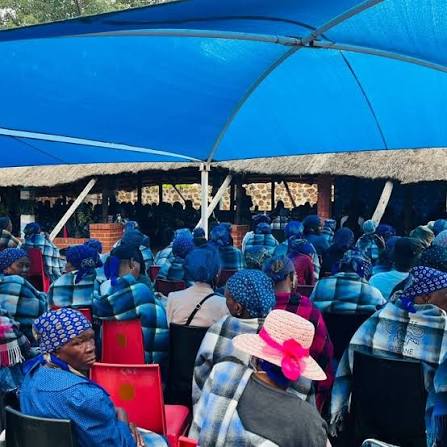
For all the speed of its growth, Mogoditshane East keeps the habits of a Botswana community. Matters of consequence are raised in front of neighbours. Traditional leadership retains an active role alongside elected councillors, and constituency meetings remain the most direct route between residents and their representatives.
Sport carries much of the social calendar. Community tournaments fill the grounds through the festive season, and Mogoditshane has a long association with competitive football. Churches, burial societies and women's groups form the connective tissue between the wards.
Language, faith and cultural programming vary across the six wards. The constituency office maintains the calendar of community events, published on the news page.
Infrastructure
Where the pressure shows.
Rapid growth arrives ahead of the services that support it. These are the areas the constituency has raised on the public record.
Health facilities
An area of more than 80,000 people is served by three public health facilities, of which one operates around the clock. This was raised in the National Assembly as a constraint on the constituency.
Schools
Overcrowding in schools has been cited as affecting performance, a direct consequence of the population increase recorded between census rounds.
Land administration
Allocation of serviced plots through the Mogoditshane Sub-Land Board is the constituency's most persistent administrative issue, and is now the subject of a parliamentary motion calling for a forensic audit.
Roads, water, waste and lighting
A settlement of 2,158 people per square kilometre that grew largely without a servicing plan carries a corresponding backlog in internal roads, drainage, reticulation and public lighting. Priority programmes are set out on the projects page.
The six wards
Who represents which ward.
Select a ward to open its profile and councillor.